The Icy Postcode: Who Gets Gritted When the Cold Snap Comes
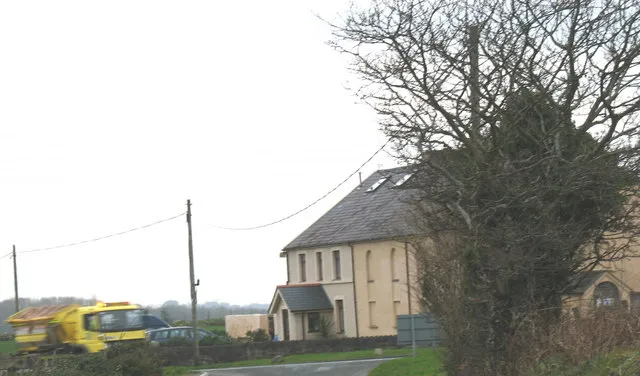
Photo: Eric Jones, CC BY-SA 2.0, via Wikimedia Commons
On a freezing morning, the gap between a safe school run and a slide into a hedge can come down to a line on a council map. As the first proper cold snap of November 2026 edges south from Scotland, that line is becoming a political one too.
Gritting looks simple from the outside: a lorry, a spinner, a load of salt. In practice, it is a rationing exercise. Councils decide which roads are 'primary', 'secondary' or not treated at all. Those decisions are shaped by budgets squeezed for years, by geography, and by how loudly residents complain.
The map in the depot
NewsWeather UK asked 28 councils across England, Scotland and Wales for their current winter service plans. The snapshot is not a national audit, but it shows a familiar pattern. In rural districts, only around four in ten B and C roads sit on a primary gritting route, compared with more than nine in ten A roads. In some commuter-belt authorities, whole estates are classed as 'not on network' — council-speak for 'you are on your own when it freezes'.
The result is a postcode lottery that follows neither need nor weather. It follows the hierarchy of road classification, the location of depots, and the cost of sending a lorry down a narrow lane. A busy A-road between two towns is almost always treated. A steep residential street used by nurses on early shifts may not be.
One council in the East Midlands told us its primary network covers 27% of its total road length but carries 78% of traffic. That sounds efficient until you realise the remaining 73% includes the roads where people actually live. Another authority in mid-Wales said its gritting budget had risen by 11% in cash terms since 2022 but had fallen in real terms once salt prices and fuel costs were counted.
Where the money runs out
Salt is not the main problem. Storage and spreaders cost money, but the bigger pressure is staffing and fuel. Winter maintenance teams are often the same crews who fix potholes in summer. When vacancies go unfilled, the first thing to be trimmed is the secondary network.
Several councils admitted they had reduced the number of precautionary gritting runs — the pre-emptive spreads before a forecast freeze. Instead, they are waiting for ice to form and responding to reports. That saves salt and diesel, but it also means the first driver down a untreated road becomes the tester.
There is also a fairness issue hiding in the data. Low-income areas are more likely to rely on buses, walking and older cars without winter tyres. They are also more likely to live on roads that councils classify as low priority. A recent survey by a transport charity found that households in the most deprived 20% of England were twice as likely to say their street had not been gritted during the last cold spell compared with households in the least deprived 20%.
What councils say
Councils insist they are making difficult choices, not ignoring residents. A spokesperson for a shire authority in the South East said: 'Our priority is keeping strategic routes open so that emergency services, buses and essential deliveries can move. We simply do not have the resource to treat every residential street, and we would encourage people to check our online map and take extra care.'
A Welsh council said it was reviewing its network after 'exceptional salt price volatility' and would 'continue to target resources at the routes with the highest risk'. A Scottish authority pointed out that its fleet had been upgraded with tracking technology, which helps it prove where gritters have been — but not necessarily send them down more roads.
Check before you skid: your pre-freeze route guide
The first hard freeze is forecast for parts of northern England and Scotland later this week, with frost possible further south. Before you set off, do these five things:
- Find your council's winter gritting map. Search '[council name] gritting routes' — most publish an interactive map showing primary, secondary and untreated roads.
- Check the forecast for your route, not just your postcode. Ice often forms in valleys and on bridges before it appears on main roads.
- Report untreated hazards. Councils prioritise reports from the public, especially on school routes and bus stops.
- Leave more time. Grit does not melt ice instantly, and a treated road can still be slippery at dawn.
- Look out for neighbours. Older people and those with mobility issues are most at risk when pavements are not gritted — and pavements are rarely on any council's primary network.
The wider question is whether the current system is fit for a country that is seeing more freeze-thaw cycles and more erratic winters. For now, the answer is in the depot, on the spreadsheet, and on the road outside your house. If it is white with frost and not with salt, you are probably not on the map.