Soggy Box, Small Print: The Rainy Truth About Your Parcel’s Last Mile
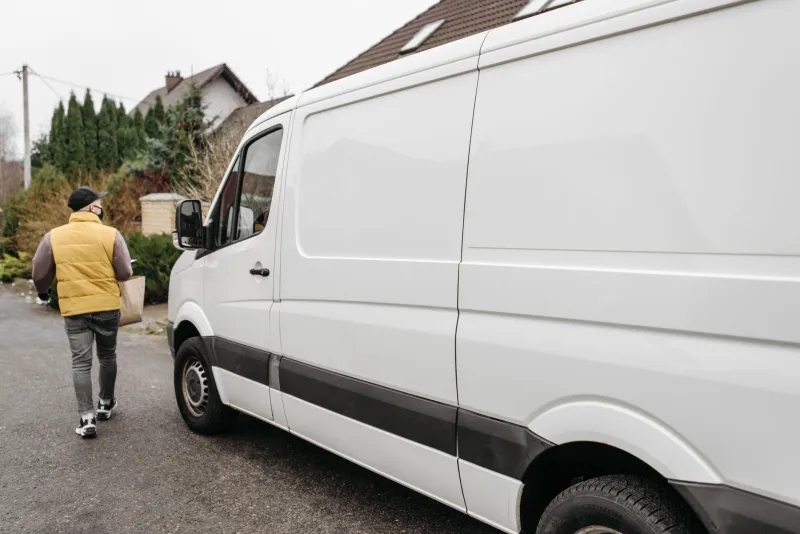
There is a particular kind of British disappointment that arrives in a sodden cardboard box. You hear the van, you miss the knock, and by the time you get to the door there is a parcel in a puddle and a card that says somebody tried. Or worse: the box is there, the tape has lifted, and the contents feel suspiciously damp. It is easy to call it bad luck. In practice, wet-weather delivery is a chain of small decisions, and the last one is often made by a courier with a scanner, a timetable and no shelter.
The last mile is the wettest mile
Most of a parcel’s journey happens in warehouses, depots and lorries where rain is somebody else’s problem. The last mile is different. It is the bit where a van parks on a narrow street, a driver walks past wheelie bins and wet leaves, and a doorstep becomes a negotiating table. In November, that mile gets longer. Not literally, usually, but effectively: slower traffic, fewer parking spaces, more blocked pavements, more people indoors pretending not to hear the bell.
Weather does not stop parcels in the way snow stops trains. Rain rarely closes a depot. What it does is add friction. It slows loading, smears barcode labels, soaks through paper delivery notes and makes every safe place look like a bad idea. A dry porch is fine. A hedge in a downpour is a gamble. A wheelie bin is not a safe place, whatever the card says.
What rain actually delays, and what it does not
This is where the story gets less dramatic and more useful. A bit of drizzle does not usually explain a three-day delay. A named storm, a flooded access road or a depot losing power can. So can the more mundane stuff: a van stuck behind a bin lorry, a route with too many drops and not enough time, or a driver who cannot find the buzzer for a block of flats.
Couriers and retailers tend to talk about “weather disruption” in broad terms, but the local picture is messier. A village lane that floods at the ford is a real problem. A city centre street with double-parked vans is a daily problem that rain makes worse. The parcel may sit in a depot for hours not because of the weather itself, but because the route that serves your postcode has been rewritten to avoid a closed road. That is weather-adjacent, not weather-caused. The distinction matters when you are trying to work out whether to blame the sky or the schedule.
The card through the letterbox
The attempted-delivery card is the most misunderstood document in Britain’s parcel economy. Sometimes it is entirely fair: the driver knocked, waited, could not get an answer and could not leave the parcel safely. Sometimes it is less fair. A card can be written before the knock. A “safe place” can be chosen by the courier rather than the customer. A photo of a parcel behind a plant pot can prove delivery without proving the parcel stayed dry.
For anyone working from home, the card is also a small insult. You were in. You heard nothing. The card says otherwise. In wet weather, the gap between what happened and what the system records gets wider. A driver may understandably rush the doorstep to protect the next parcel, the scanner and their own coat. The result is a delivery that is technically attempted, practically missed and emotionally annoying.
Who pays for a soaked parcel?
Here is the bit people usually discover only after the cardboard has collapsed. If you bought from a retailer as a consumer, your contract is generally with that retailer, not with the courier. Consumer law in the UK puts the responsibility for getting the goods to you on the trader in most ordinary online purchases. That does not mean every damp box is automatically a refund. It means the starting point is a conversation with the shop, not a treasure hunt for the courier’s customer service number.
The picture gets blurrier when you have nominated a safe place. If you told the retailer or courier to leave parcels in the shed, and the shed leaks, that is a harder argument than a parcel left in the rain without instruction. If a courier ignores your instructions and leaves a box on a exposed doorstep, the retailer is likely to be the one who has to sort it out. If the parcel was left with a neighbour and then sat in their porch for a week, the facts matter. Keep the packaging, photograph the damage and save the delivery confirmation. It is boring advice, but it is the difference between a replacement and a long email chain.
The depot’s view
It is worth saying that depots are not filled with people cackling at wet cardboard. Rain creates real operational headaches. Labels smudge, handheld scanners misread, paper manifests turn to pulp and drivers lose time drying off between drops. Some couriers provide waterproof covers or bags; some do not. Some retailers pack in flimsy cardboard that survives a warehouse but not a two-minute shower on a doorstep.
The pressure runs downhill. A driver on a tight route has an incentive to leave a parcel and move on. A retailer has an incentive to say it was delivered. A customer has an incentive to complain. In the middle is a box that was never designed for British weather and a doorstep that was never designed as a loading bay.
What you can do before the next downpour
If you are ordering something expensive or perishable, make the delivery instructions specific. “Leave in porch” is better than “safe place”. “Do not leave outside” is better than hoping. If you have a genuinely dry spot, say so, and say where. If you do not, ask for a click-and-collect or a locker. It is less romantic than a doorstep surprise, but it is drier.
When something goes wrong, complain to the retailer first. Send photos of the box, the label and the damp contents. Note the time and what the tracking said. If you paid by card and the retailer will not engage, your card provider may have a route, but that is a last resort, not a first move. And if a courier leaves a parcel in the rain against your instructions, say so plainly. The system only learns what customers record.
The parcel in the puddle is not just a weather story. It is a small test of how Britain’s delivery boom copes with ordinary November rain: a last mile with too many doors, too few dry porches and a piece of cardboard expected to hold the line. The forecast is not the villain. The gap between what we order and what we prepare for is.