After the 3.45pm Shutdown: Who Really Pays for Britain’s Early Dark
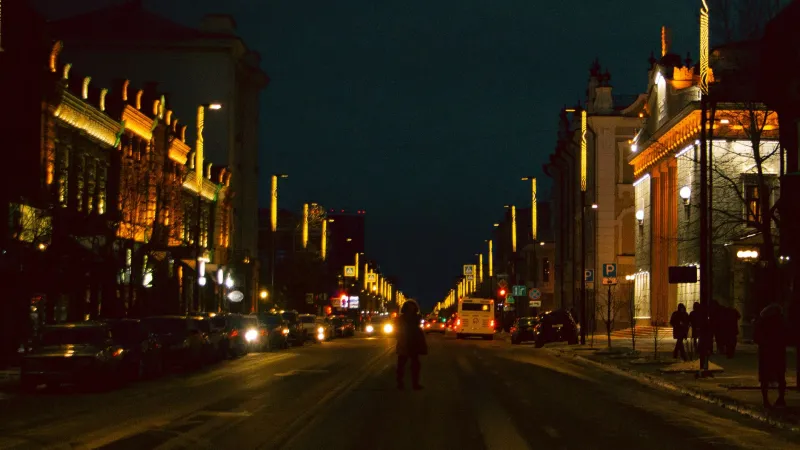
By the end of November, the sun will set before 3.45pm in Lerwick and much of northern Scotland. In Manchester, Leeds and Newcastle, the working day will end in darkness. The clocks have gone back, the school run is in twilight, and the high street’s busiest hours are being squeezed into a few grey minutes.
That is usually where the conversation stops: vitamin D, sad lamps, a bit of seasonal gloom. But the early sunset is not just a feeling. It changes how people move, spend, work and end up in hospital. And the evidence from town centres, transport teams and frontline staff suggests that Britain’s winter infrastructure is still built around an assumption that most of us are awake in daylight.
The high street’s second closing time
Councils have spent years measuring footfall. Wi-Fi counters, camera sensors and town-centre managers all tell a similar story: once natural light goes, the afternoon peak collapses on side streets and shopping parades that are not brightly lit or well overlooked. The main road with the supermarket and the bus stop keeps moving. The quieter street with the independent shops does not.
In Hexham, a bookseller who asked not to be named says she now closes at 4pm on Tuesdays and Thursdays in winter. It is not that trade stops completely. It is that the walk to the car park feels less safe, the staff are often alone, and the customers who might browse after work have already gone home. ‘In summer, people linger,’ she says. ‘In November, they buy what they came for and leave.’
That pattern is repeated across market towns and suburban parades. It is not simply a retail problem. A high street that goes dark early loses its role as a place to meet, wait for a bus, collect a parcel or kill twenty minutes before a train. Councils can put up Christmas lights and run late-night shopping events, but those are exceptions. The ordinary winter evening is a different test.
The school run in twilight
Road safety teams have long warned that the weeks after the clocks change are among the most difficult of the year. The 3.30pm school run now happens in twilight or darkness for many families. Children in dark coats cross between parked cars. Cyclists without decent lights disappear into the kerb. Drivers who have spent the day in an office adjust to night vision while also looking for a parking space.
Some councils have responded by changing part-night lighting schedules, upgrading crossings near schools and pushing ‘be safe, be seen’ campaigns. Others have cut street-lighting hours to save money. The result is a postcode lottery in visibility. A child walking home in one district may have a lit crossing and a school street; a child a few miles away may have neither.
This is where local data matters. Council road safety teams can map collisions against lighting columns, school gates and bus stops. But that work is often siloed from the high street team, the transport team and the public health team. The early sunset is a single event that lands across all of them.
Hospitals feel it after dark
Emergency departments do not record ‘darkness’ as a cause of attendance, but winter pressures arrive in familiar clusters: falls, road collisions, breathing problems and alcohol-related injuries. The afternoon-to-evening handover is particularly stretched when the light goes early. Staff arrive in the dark, leave in the dark, and often commute home on unlit paths or crowded buses.
A nurse in Sheffield describes the 5pm to 7pm window as ‘the second morning’—a surge of people who have finished work or school and are now seeking help. In winter, that surge coincides with reduced daylight, colder temperatures and more slips and trips. Hospitals can plan for seasonal demand, but they cannot magic up extra daylight. They can, however, work with councils on transport, parking and safe walking routes for staff and patients.
The home office that never sees the sun
For home workers, the early sunset is a productivity and wellbeing issue that rarely makes it into employment policy. A spare-room office with one small window may get two hours of usable daylight in November. Meetings run through the brightest part of the day. By the time the laptop closes, the chance to go outside has gone.
Some employers have introduced ‘daylight hours’—blocking early-afternoon meetings or encouraging walks. Others have done nothing. The result is that winter working patterns often depend on the goodwill of a manager rather than a clear policy. Councils cannot fix that directly, but they can influence it through libraries, warm hubs and co-working spaces that stay open into the evening.
A winter timetable, not a summer one
The 3.45pm sunset is not a reason to panic. It is a reason to stop pretending that the country runs on the same clock all year. High street policies, lighting schedules, school travel plans, hospital shift patterns and transport timetables were mostly designed for a daylight economy. For several months of the year, they are operating outside their design brief.
A few practical changes would help: publish winter footfall data alongside summer figures, audit lighting on routes to schools and stations, coordinate high street events with bus timetables, and treat safe walking routes as hospital and council infrastructure rather than an afterthought. None of that requires a new national strategy. It requires local teams to talk to each other before the clocks go back, not after.
The dark arrives at the same time every year. The response does not have to be a surprise.