The Yellow Box Nobody Reads: Why Weather Warnings Need to Speak Local
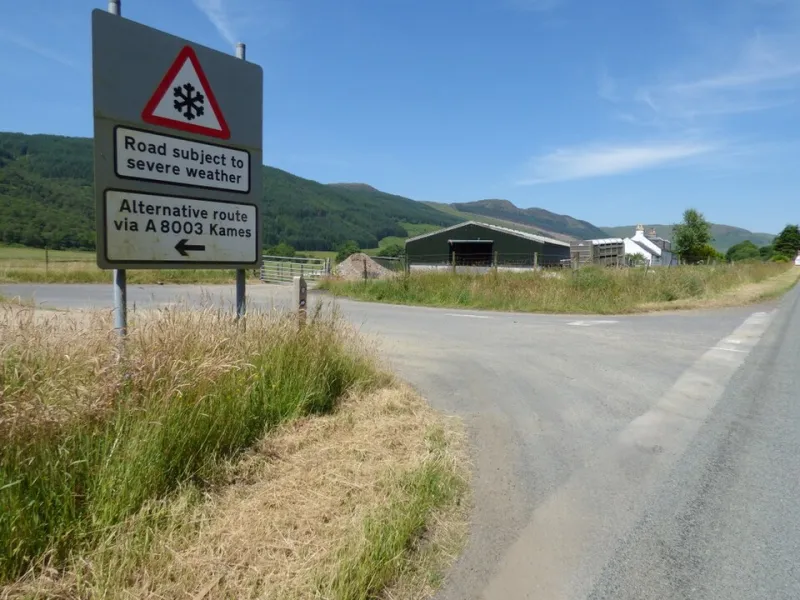
Photo: Thomas Nugent , CC BY-SA 2.0, via Wikimedia Commons
The yellow warning is supposed to be a nudge. Too often it is a shrug. A triangle appears on a phone, a forecaster says ‘be prepared’, a council retweets it, and most people get on with their day. Then the wind blows a fence down, a road floods, or a train line closes, and everyone asks why nobody told them anything useful.
This is warning fatigue, and it is not a failure of public intelligence. It is a failure of translation. National weather warnings cover large areas and broad hazards. They are necessarily generic. But the public does not live in a forecast polygon. It lives on a street with a known drain, a school run with a known crossing, a bus route that stops when the wind picks up.
Wallpaper weather
The Met Office warning system is not broken. Amber and red alerts carry real weight, and forecasters are right to err on the side of caution when lives are at risk. But the yellow warning has become wallpaper. It appears so often, for such wide areas, that it struggles to prompt a specific action. People see yellow and think ‘bit windy’ or ‘take an umbrella’. Sometimes that is correct. Sometimes it is dangerously wrong.
Councils know this. Communications teams spend winter trying to add local detail to national alerts: which roads flood, which schools might close, where gritters are going. Community groups do the same on WhatsApp and Facebook. Forecasters would like their warnings to be better understood. Yet the system still often speaks in the language of probability rather than the language of place.
The local information gap
A yellow rain warning stretching from Cornwall to Kent is technically accurate and practically useless. It tells a householder in a flood-prone valley nothing about whether to move their car. It tells a commuter in a city nothing about whether their train line is likely to close. It tells a carer nothing about whether the usual route to an elderly relative will be passable.
Local councils are sitting on much of the information that could close that gap: flood maps, gritting routes, school closure plans, emergency rest centres, road closure histories. Some publish it well. Many publish it in PDFs that nobody reads until the water is at the door. The answer is not another national campaign. It is a local action layer that sits on top of the national warning.
Three lines, not three paragraphs
Imagine a yellow warning for heavy rain in a Midlands district. Instead of a generic message, the council’s social feed and website could carry a simple box:
What will happen here: surface water on the A-road at the ford; minor flooding possible on two side streets.
What to do now: move cars off the low street; check gutters; allow extra time for the school run.
Where to get help: council flood line, sandbag collection point, emergency number for vulnerable neighbours.
That is not dumbing down. It is translating. It respects the public’s time and gives them something to act on. It also gives councils a way to build trust before the next warning, because people can see that the advice was specific and sensible.
Plainer thresholds
Part of the problem is that ‘be prepared’ is not an instruction. Prepared for what? A power cut? A flooded cellar? A cancelled train? Councils and forecasters could agree local thresholds for common hazards: the wind speed at which the market stalls pack up, the rainfall level at which the underpass closes, the temperature at which the gritting fleet goes out.
These thresholds do not need to be perfect. They need to be published and consistent. If residents know that a certain road closes when the river hits a certain level, they can plan. If they know that a yellow warning in their area usually means ‘check the bins are secure’, they will not panic. If it usually means ‘move the car’, they will act.
Trust is built in quiet weather
Warning fatigue is often described as a public problem. It is also a communications problem. If councils only appear when there is a warning, they are seen as alarm bells. If they explain their decisions in quiet weather—why the sirens were tested, why the road closed, why the warning was amber rather than yellow—they build a reserve of trust.
Community groups are vital here. Residents’ associations, faith groups, sports clubs and school gate networks often reach people that council newsletters do not. They can translate a warning into a practical offer: a lift to the shops, a check on a neighbour, a spare torch. Councils should fund that quiet work, not just the loud alerts.
Forecasters, meanwhile, should be honest about uncertainty without hiding behind it. A warning that says ‘there is a chance of disruption’ is accurate but not actionable. A warning that says ‘the most likely disruption is on high ground and coastal roads’ is better. Local partners can then fill in the street-level detail.
The fix is not more warnings. It is better warnings, and better local translation. Britons are not numb to the weather. They are numb to being told to ‘stay aware’ by a national system that does not know where they live. Give them a specific instruction, a local threshold and a reason to trust it, and the yellow box might start to mean something again.