No Email, No Announcement: The Fog That Grounds You Without Ever Saying Sorry
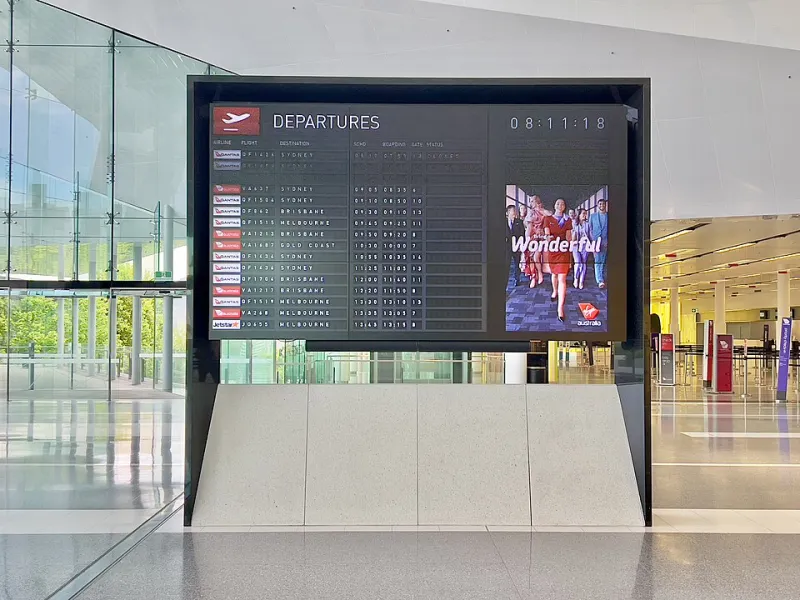
Photo: Kgbo, CC BY-SA 4.0, via Wikimedia Commons
You're at the gate. The board says delayed. The sky outside is the colour of a dishcloth, and a patient voice is explaining that visibility is below the required minimum. Nobody has cancelled anything. Nobody has offered you anything either.
Fog is the great understated disruptor of the British travel calendar. It doesn't rip roofs off or flood car parks. It just sits there, quietly shredding the day's schedule while the departure board ticks over in increments of twenty minutes.
The announcement that never comes
Storms get names, warnings and rolling coverage. Fog gets a yellow warning that half the country scrolls past. Yet the operational effect can be bigger, because low visibility doesn't cancel flights so much as strangle the flow of them.
At a busy airport, fog triggers low visibility procedures. Aircraft have to be spaced further apart on approach, which means the arrival rate can fall from the high thirties per hour to the low twenties. Everything downstream piles up: holds in the air, delayed departures on the ground, and a queue of aircraft waiting for a slot.
Why fog beats a gale for sheer mess
A gale is disruptive but predictable. Crews know hours ahead, and cancellations get issued early enough for people to rebook.
Fog is local, patchy and stubborn. It can sit over one airport while the one forty miles away is clear. It can lift at eleven and return at three. Airlines would rather delay than cancel, because a cancelled flight triggers obligations that a delayed one sometimes avoids — so the day stretches out, and passengers sit in a terminal with no clear picture of whether they're going anywhere.
The call belongs to a chain rather than a single villain. Air traffic control sets the flow rate and the procedural separation. The captain makes the final decision on whether it's safe to land or depart. The airport decides what its runway systems can support. Nobody in that chain is being difficult; they're all following limits written in blood.
The weather at your airport is only half of it
Here's the bit that catches people out. Your aircraft may not be where you left it. If the plane due to operate your evening flight got stuck at a fogbound airport that morning, your clear, calm departure point is irrelevant — the aircraft simply isn't there.
Crew hours add another layer. A delay pushes the whole rotation later, and once a crew runs out of duty time, the flight stops regardless of what the sky is doing outside the window.
What you're owed, and what you're not
The UK's retained flight compensation rules — usually called UK261 — split passenger rights into two separate pots, and fog affects them differently.
The first is the duty of care. If your flight is delayed beyond certain thresholds or cancelled, the airline must look after you: food and drink, means of communication, and if you're stuck overnight, accommodation and transport to it. This applies regardless of the cause, including bad weather. There is no fog exemption. Two free calls and a hotel room are not a favour.
The second is cash compensation. That's the fixed sum — £220, £350 or £520 depending on distance — payable for long delays on arrival and for cancellations with short notice. Weather usually counts as an extraordinary circumstance, which means the airline can argue it doesn't owe the cash. In practice, most fog claims will fail on that basis, and it's worth being realistic about it before you spend an evening on a form.
Delay, diversion and cancellation are three different animals
A cancellation with less than fourteen days' notice gets you a refund or a replacement flight, plus care while you wait.
A long delay gets you care, and potentially compensation if the cause was within the airline's control.
A diversion is the awkward middle child. If your flight lands somewhere else, the airline is expected to get you to the airport you paid for, or cover the cost of doing so yourself. Keep every receipt — the coach from Stansted at one in the morning is exactly the kind of expense that should be claimed back.
Who to chase
Claim from the airline, not the airport. The airport provides the runway; the airline owes you the duty of care. If the response is a shrug, you can escalate to the Civil Aviation Authority or an approved dispute resolution scheme. In England and Wales you have up to six years to bring a claim, so a rejection letter isn't necessarily the end of it.
And keep the receipts. All of them. The sandwich, the taxi, the budget hotel by the ring road. A claim with evidence is a claim that gets paid.
The takeaway
Fog rarely produces the dramatic email people expect. It produces a long, grinding day in a departure lounge and a slow unwinding of the timetable. Know what you're entitled to, ask for it plainly at the desk, and remember the airport isn't the one holding the purse.