Salt, Radar, and the 3am Call: The Quiet Chain That Decides Your Morning Road
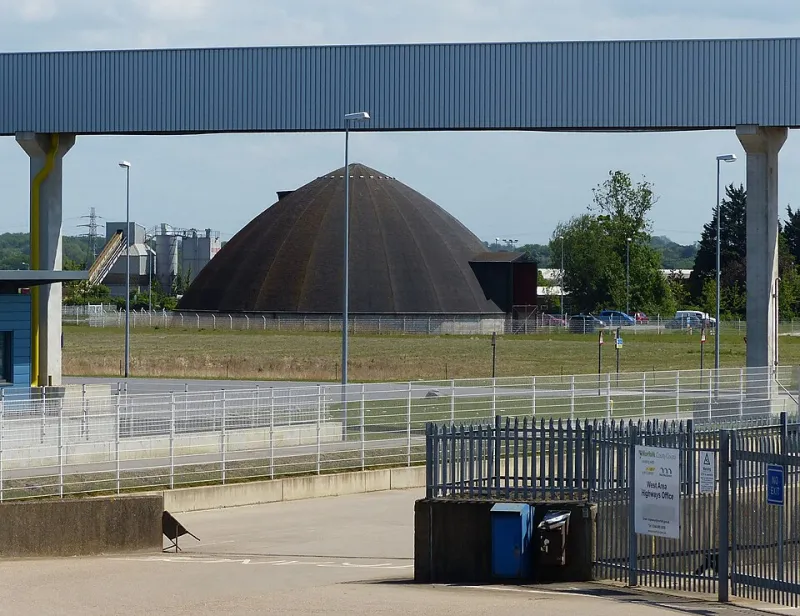
Photo: Mat Fascione , CC BY-SA 2.0, via Wikimedia Commons
At 3.12am on a Tuesday in mid-November, a duty officer in a council highways control room is staring at a radar loop that looks, frankly, like a smudge. The temperature teetered above zero at midnight. The road sensors say one thing; the forecast app says another. By 3.20am, a decision has to be made about whether to send the gritters out. Nobody will clap. Most people will never know it happened. But by 7.30am, that decision will be the difference between a slow, slippery school run and a normal one.
This is the bit of winter that rarely gets a headline. Not the dramatic snow event, not the amber warning — the ordinary, repetitive, budget-watching business of deciding when salt goes out. And the surprising thing is how many hands it passes through before a gritter ever leaves the depot.
The first domino is a radar loop and a threshold
Most councils don't grit the moment the forecast mentions the word 'frost'. They work to a winter service plan, which sets out trigger points: road surface temperature, forecast confidence, moisture, time of night, and which routes are on the list. A duty officer might be watching a prediction model that says the road will drop to minus 0.5C at 5am, with damp conditions. In one council, that triggers a 'precautionary salting' run. In the neighbouring authority, the same forecast might fall just short of its threshold — or it might hit it, but only for the primary routes.
This is why two towns separated by a few miles can wake up to very different roads. It isn't usually incompetence. It's a combination of written thresholds, local knowledge, and the fact that forecasts are probabilistic, not certain. A duty officer in one area might know that a particular bridge ices first, every time, because drivers have reported it for years. Another might have a newer sensor that hasn't yet earned that same trust.
The depot manager's gamble
The decision doesn't end with the duty officer. It lands, often by phone or radio, with the depot manager who has to make the salt budget stretch to March. Salt isn't free, and neither are the drivers, the fuel or the maintenance. A full precautionary run across a county's primary network can cost tens of thousands of pounds in a single night. Do that five times in a fortnight on a forecast that doesn't quite come off, and the budget starts to look thin before Christmas.
So there's a quiet gamble built into the system. Go early and you might waste salt on a night that turns mild. Go late and you might be explaining a cluster of minor crashes to a scrutiny committee in January. Most depot managers will tell you they'd rather be criticised for over-preparing than under-preparing — but the budget doesn't always let them say that out loud.
In 2026, many authorities are also dealing with the hangover from several mild winters followed by sharp, late cold snaps. Salt stocks are usually ordered well in advance, but the logistics of moving it around the country can get tight if several councils want extra at the same time. That's when the phone calls between neighbouring depots get interesting.
Why two councils, two different roads
Take two hypothetical councils — call them Northshire and Southshire — with a shared border and a shared forecast. Northshire's plan might prioritise its bus routes and A-roads, with a lower trigger temperature. Southshire might have a higher trigger, but a longer list of secondary routes that get treated when conditions are right. On a marginal night, Northshire sends out eight gritters at 4am. Southshire sends out none, because its model says the road temperature will stay just above freezing until sunrise.
By 8am, Northshire's main roads are wet but clear. Southshire's are also mostly fine — except for one shaded lane on a hill where the sensor sits in a slightly different microclimate. The postman notices. The school bus driver notices. The local Facebook group definitely notices.
This is the part residents rarely see: the gritting map is not a single, uniform promise. It's a hierarchy. Primary routes — usually A-roads, main bus corridors and key access roads to hospitals — get treated first. Secondary routes follow. Residential streets are often left out entirely, unless there's a sustained cold spell or a specific local risk. That's not a secret, but it is buried in a PDF on a council website that most people will never open.
The map you never see
What would actually help residents is not a promise that every street will be gritted — that's not realistic — but clearer information about which routes are on the list and when the decision is made. Some councils now publish live gritter tracking during cold snaps. Others publish a map of primary routes but not the triggers. A few publish nothing beyond a generic winter services page.
The gap matters because it shapes expectations. If you know your street is a secondary route, you can plan for the fact that it might not be treated until later in the morning. If you know the council's trigger is minus 2C, you can guess that a forecast of minus 1C probably won't mean gritters. It's not about demanding more salt — it's about knowing what the plan actually is.
What residents can actually learn from this
The next time you wake up to an untreated road, it's worth remembering that the decision was probably made hours earlier, by someone looking at a screen in a quiet room, weighing a forecast against a budget. They might have got it right. They might have got it wrong. But it was a decision, not an accident.
If you want to know more, your council's winter service plan is usually online. Look for the trigger temperatures, the route hierarchy and the salt stock figures. It won't make your hill any less icy, but it will tell you who to ask when the gritter doesn't come — and why the answer might be more complicated than it looks.