The Bus That Never Came: Who Actually Decides When a Village Loses Its Winter Lifeline
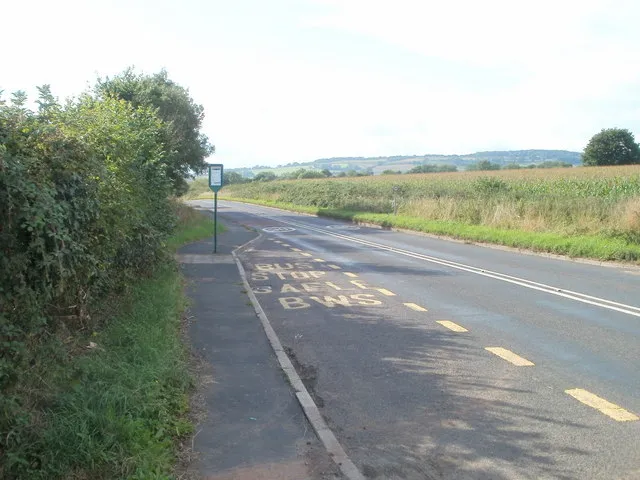
Photo: Jaggery , CC BY-SA 2.0, via Wikimedia Commons
At five past seven on a hard frost morning, the stop at the end of the lane fills up. Two commuters, a woman with a hospital appointment, a teenager who has already checked her phone eleven times. Then nothing. No bus, no notice on the shelter, no explanation. Just the sound of somebody's kettle going on somewhere behind a hedge.
This is the small, annual drama of rural Britain in winter — and it almost never comes down to one person making one call. It's a chain, and once you can see the links, you know who to ring.
It begins with a forecast, not a snowflake
By the time the 07:05 is in doubt, the wheels have usually been turning for twelve hours. Operators watch Met Office warnings, but the warning colour is only part of it. A yellow for ice over a valley road that never gets sun can be more decisive than a headline-grabbing amber that lands on already-gritted A-roads.
Most firms run what's known as an early-morning "route check" — a driver or supervisor out before dawn on the vulnerable stretches, often the same hills, bends and exposed bridges every time. What they're really assessing is not whether snow is falling, but whether the vehicle can stop safely on the road as it actually is at 06:00, including the bits nobody salted.
Commercial route, supported route — and why the difference matters
This is the first fork in the road, and passengers rarely know which side of it they're on.
- Commercial services are run at the operator's risk. The company decides whether to run, trim the route, or pull it. There's no duty to consult, and no statutory minimum notice, though many firms post updates on social media or their app.
- Tendered, council-supported services sit on a contract. Here the local authority is paying for the route, so it has leverage — and often a clause about how cancellations get reported, and to whom. If your village bus only exists because a council subsidises it, your council's passenger transport team already has a seat at the table.
- Community and volunteer transport — minibuses run under section 19 permits, car schemes — tends to be the most nimble and the most fragile. One driver with a chest infection and the whole thing stops.
A quick way to find out which you've got: check whether your route appears in your council's published list of supported bus services. It's usually a dull spreadsheet on a council website, and it's genuinely useful.
School buses are a different animal entirely
When people ask why the village bus was cancelled but a school coach sailed past, there's a reason — and it isn't favouritism. Home-to-school transport for eligible pupils is a legal duty on the council, which means it sits in a different budget, a different contract and a different decision room. Winter arrangements for school runs are usually planned weeks in advance, with named contacts on both sides.
That said, the duty isn't unconditional. Councils can suspend, and the test is broadly about whether it's reasonable and safe. If you've got children on a rural route, the practical questions are simple: where is the cancellation announced, by what time, and does the school know before the parents do?
The gritting list is a statement of priorities
Every winter, highway teams work to a published winter service plan. Primary routes — main roads, bus corridors, access to hospitals and fire stations — get treated first. Secondary routes follow. Estate roads and single-track lanes with four houses usually don't get treated at all, regardless of how many people depend on them.
That list is not a secret. It's a public document, and it explains a great deal about why the main road is clear while the lane to the stop is a skating rink. If a route has quietly slid down the priority order after a budget round, asking about it in a public meeting is fair game.
Who gets left behind
When a rural route goes, the stranded list is fairly predictable and fairly awkward. Shift workers in care and hospitality. Older residents with no second car. Anyone with an appointment in a town twenty miles off. Young people who can't yet drive. And the people who were only just managing on two buses a day, which now effectively means one.
There's a knock-on too. A cancellation isn't a single lost journey — it's a lost habit. Passengers who work out that the winter timetable can't be trusted start finding lifts, and some of them don't come back in April. Operators know this, which is why many are reluctant to cancel unless the road genuinely defeats them.
What to ask before the next cold snap
Five questions, all answerable, none rude:
- Is my route commercial or supported, and who holds the contract?
- Where is the gritting priority for the roads the bus uses? Ask for the winter service plan, not a summary of it.
- How do cancellations get communicated, and how early? If the answer is "on our Facebook page, usually", push for something that doesn't rely on a working smartphone at 6am.
- Is there an alternative? Demand-responsive transport, community car schemes and hospital volunteer drivers exist in more places than people realise — and often go unused.
- Has the route's contract changed recently? Cuts to evening and Sunday journeys in the autumn often preview the winter picture.
The bit nobody says out loud
The decision to cancel a rural bus is a safety decision most of the time. Occasionally it's a commercial one dressed up as safety. Determining which is which is not always possible from the outside, and that ambiguity is exactly why so few passengers bother challenging it.
But the underlying question is bigger than any one route: how much connectivity is a village entitled to when the weather turns? Nobody in Westminster or the town hall has ever given a straight answer to that, and in the absence of one the answer gets made in a depot office at half five in the morning.
Worth knowing, then, who's in the room — and whether anyone who lives up the lane has ever been invited in.