The Rain Diary Down the Road: Britain’s Unpaid Weather Keepers and the Data Nobody Owns
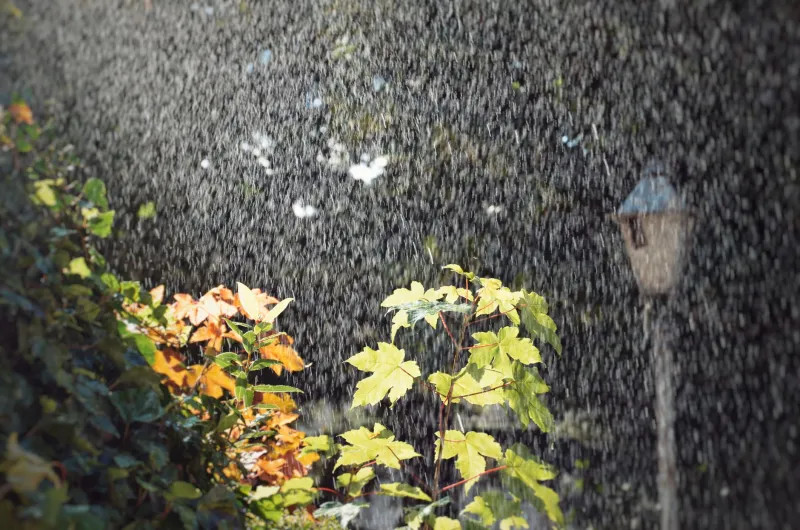
There is a rain gauge in a shed in a village somewhere near you. It is probably plastic, probably slightly wonky, and probably more locally trusted than anything on a government dashboard. Its keeper — a retired teacher, a farmer, a trainspotter with a spreadsheet habit — has been noting down rainfall most mornings for years. Occasionally they ring the council when the brook gets lively. Occasionally nobody rings them back.
That is the strange status of Britain’s unofficial weather records. They are everywhere and nowhere. They fill gaps in the official network, they give a village its own memory of floods and droughts, and they often sit outside the formal systems that decide whether a warning is issued, a flood investigation is opened or a council says the right things after the water goes down.
As another wet November in 2026 puts local drainage and local patience under strain, it is worth asking a boring but important question: who actually owns the weather record down the road?
The gap between the map and the garden
Official weather monitoring is not meant to be everywhere. The Met Office and its partners run a network of stations designed to give a reliable national picture, not a street-by-street one. That is sensible. You do not need a calibrated anemometer on every cul-de-sac. But it does mean that when a thunderstorm parks itself over one town and drenches it for two hours, the nearest official gauge can be miles away and reporting something much less dramatic.
Community stations and amateur observers help close that gap. Some are highly organised, feeding into online networks and using decent kit. Others are a bucket, a ruler and a notebook. Both kinds can be useful. Neither kind is automatically part of the formal warning chain.
That matters because local memory is not a luxury. If a culvert floods every time there is 20mm of rain in an hour, the people who live beside it know. If the only long-running rainfall record for a town is in a volunteer’s shed, then that shed is effectively a local archive. It is also a single point of failure.
Who checks the checker?
There is a reason official data goes through quality control. Rain gauges can be badly sited, blocked by leaves, splashed by a shed roof or read at inconsistent times. A volunteer might record 9am-to-9am rainfall while an official station uses a different day boundary. None of this is dishonest. It is just messy.
But messy does not mean useless. The question is what the data is being asked to do. A garden gauge is brilliant for local interest and for flagging that something unusual has happened. It is less brilliant as the sole evidence in a flood investigation or an insurance dispute. For that, you need metadata: where the gauge is, what type it is, how often it is checked, who checks it, and what happened when it was broken for three weeks in 2019.
Some volunteer networks already do this well. Others do not. The gap between a enthusiastic amateur and a formally recognised observer is often not enthusiasm but paperwork, calibration and time. Those things cost money, or at least they cost somebody’s weekend.
The funding question nobody wants to answer
Here is the awkward bit. Britain’s unpaid weather observers are, in effect, providing a public service with private kit. They buy the gauges, maintain them, read them and often publish the results for free. When a local record proves useful, it is rarely because a council paid for it. It is because somebody cared.
That model works until it doesn’t. Volunteers move house, lose interest, fall ill or die. A record that ran for thirty years can stop in a fortnight. If nobody has archived it properly, or if the spreadsheet lives on a laptop that gets wiped, the local memory goes with it.
Councils facing squeezed budgets are unlikely to start funding rain gauges across the country. But there are cheaper options. Small grants for calibration and equipment. A local records officer who knows which community stations exist. A simple standard for metadata. A route for volunteers to deposit their records with a local archive or library. None of that is glamorous. All of it is cheaper than losing the data and then paying consultants to reconstruct a flood history from anecdotes.
Credit where it is due
There is also the question of credit. Volunteers are often happy to help, but they are less happy to see their records used in a report with no acknowledgement. If a community station’s data informs a local flood study, say so. If a volunteer’s diary is cited, name them, with permission. If data is published openly, use a licence that makes the terms clear.
This is not just manners. Credit encourages more observers. It builds trust between formal agencies and local people. And it makes it more likely that the next person with a rain gauge will share what they have rather than keep it in the shed.
What a better system would look like
The answer is not to formalise every garden gauge. It is to build a bridge between the informal and the official. Recognise community stations as a useful tier of local observation. Give them a clear way to submit data and a clear statement of how it will be used. Fund the basics: calibration, archiving, small equipment grants. And accept that some records will always be a bit rough around the edges.
As November 2026 continues to test drains, brooks and patience, the rain will not care whether the gauge is official. It will just fall. The least we can do is make sure the people who write it down are not left out in the cold — and that their records do not disappear when the shed is cleared.