A Squall by Any Other Name: How Britain Decides Which Storms Get a Headline
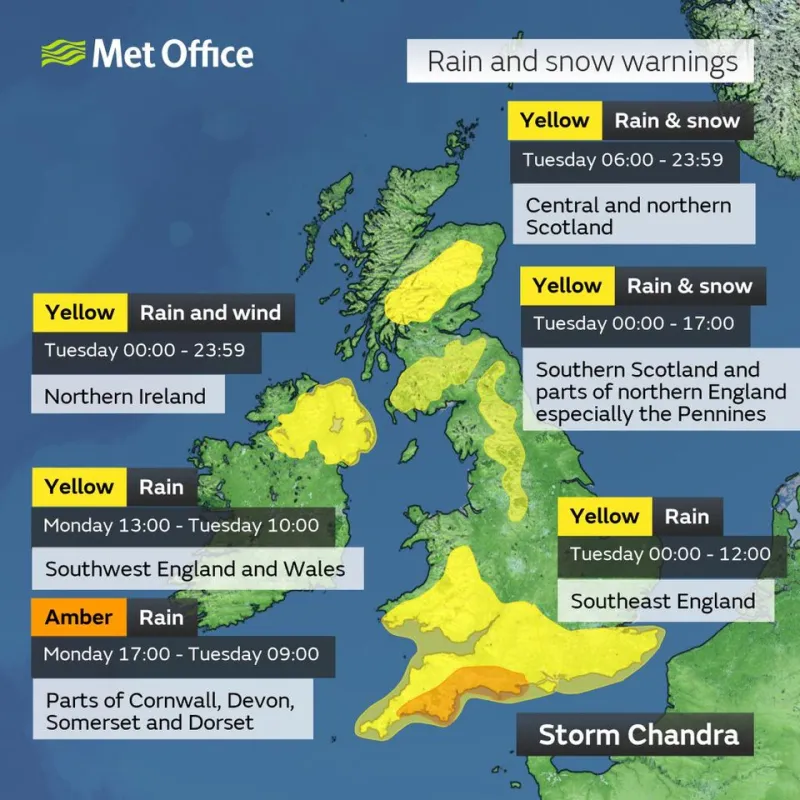
Photo: Met Office, OGL 3, via Wikimedia Commons
On a blustery Tuesday in November, the difference between a miserable commute and a national news event can come down to a spreadsheet, a phone call and a name that sounds good on a weather map.
That is not a complaint about meteorology. It is how the UK's storm-naming system works. Since the 2015-16 season, the Met Office and Met Éireann have jointly named storms; the Dutch agency KNMI joined for the 2019-20 season. The idea is simple: give a significant weather system a name and people are more likely to remember it, share warnings and act. But the system is not a law of nature. No statute says a deep low pressure system must be christened. It is a communications tool, and like all communications tools it has politics, thresholds and blind spots.
As the 2026/27 storm season gets going, it is worth asking who actually decides, and why your street can be battered by an unnamed gale while a named storm hogged the headlines a fortnight earlier.
The table, the list and the near-miss
The naming group is not a secretive committee in a bunker. It is a working arrangement between forecasters at the Met Office, Met Éireann and KNMI. Each year the three agencies publish a list of names, alternating male and female and roughly alphabetical. Members of the public can suggest names; forecasters choose from the list when a system merits one.
The criteria sound straightforward enough. A storm is usually named when it has the potential to cause significant impacts in the UK, Ireland or the Netherlands, typically through amber or red warnings. Wind speed alone is not the trigger. Rain, snow, ice and even the timing of a system can matter. A fast-moving low on a school day is a different beast from the same low on a Sunday in August.
There is cross-border choreography here. If Met Éireann names a system, the Met Office uses the same name. If KNMI gets there first, the name travels too. The point is to avoid one storm having three identities and to stop newsrooms confusing the public with competing nicknames.
But the arrangement is not a veto system. Each agency can name a storm that affects its own patch. A system that barely ruffles the Netherlands can still justify a name in Ireland if it threatens coastal flooding. A UK-only event can be named by the Met Office without waiting for a consensus. The list is shared; the judgement is operational.
Why some weather gets a name and other weather gets a shrug
The awkward truth is that storm naming is a forecast, not a verdict. A system can look like a named storm on Monday, then drift north by Wednesday and leave the amber warnings looking overcooked. By then the name may already be in headlines and the warning may have been downgraded.
The reverse happens too. A low can arrive with only yellow warnings, cause localised flooding, close a school and block a village road, and never get a name because it did not meet the impact threshold across a wider area. To the people affected, it was a storm. To the naming group, it was a wet and windy spell.
That is where the lottery feeling comes from. It is not random, exactly. It is uneven. A named storm in the south-east of England will usually get more national coverage than an unnamed flood event in a rural area, partly because news desks are based in London and partly because names travel. 'Storm X' is easier to search than 'the low pressure system due Thursday'.
There is also a media effect. Once a storm has a name, it gets graphics, live blogs and a narrative arc. An unnamed weather event has to earn attention through damage. That can distort public understanding of risk. A yellow rain warning that causes local flooding may matter more to a village than a named windstorm that fells a few trees, but the named storm gets the presenter standing in a puddle.
What a name actually changes
For councils, a named storm is a cue. Emergency planners check rest centres, highways teams review gritting and tree-cutting rotas, communications teams prepare school closure messages and social care teams check on vulnerable residents. But the name does not release extra money, conjure salt stocks or guarantee that every fallen branch is cleared before the morning school run.
For insurers, a name is not a magic claims trigger. Policies respond to damage, not adjectives. But naming does help call centres and loss adjusters sort events, and it gives customers a shared shorthand when they ring up. 'It was the storm on the 14th' is less useful than a name.
For the public, a name is a shortcut. It helps people find forecasts, check travel updates and understand that the warning on their phone is part of a bigger system. But it can also create warning fatigue. If every named storm is framed as a national emergency, people may stop listening when an unnamed one is genuinely dangerous.
The 2026 test
This winter, watch what happens when an amber warning arrives without a name, or a name arrives with only a yellow warning. Ask whether your council has updated its emergency plan, whether your insurer has a clear claims line, and whether your phone alert is actually switched on.
The name is the headline. The gritter is the story. At NewsWeather UK, we will be tracking both.